Notes from My Sabbatical
When people find out I have spent years managing engineering teams, they often assume the job is about being a director. They picture someone standing at the front of the room, calling the shots, dictating the architecture, and orchestrating every move from the top down.
I have always preferred the metaphor of the stage manager.
In a theater, the director gets the opening night credit, but the stage manager runs the universe. The stage manager doesn’t act, write the script, or design the lights. Instead, they build and maintain the invisible infrastructure that allows highly specialized, creative, and completely different personalities to show up and perform their roles with total confidence. If the stage manager does their job perfectly, you never notice they are there.
Lately, my stage management skills have been tested in the most rewarding way possible. Our household here in Burke recently expanded when our eldest daughter, Sayward, and her two young children moved back home with us.
Suddenly, our home became a beautifully complex, multi-tenant environment. We are now seven people (and seven dogs!) living under one roof, managing an incredible mix of human operating systems. We have my brother Nathan, who lives with schizophrenia, my nephew Isaac, who is autistic, three generations of family, and a pack of hounds.
If you try to run an environment like that with a rigid, one-size-fits-all set of rules, the system will crash. You cannot force a neurodivergent adult, a busy parent, and a five-year-old child into the exact same processing loop. You have to design a supportive ecosystem.
The Architecture of Interdependence
But the ecosystem doesn’t stop at our back door. We also rent a cabin on the property to a couple we have known for twenty years. Over Christmas, the husband had to go in for major heart surgery.
When a crisis like that hits a small community, you realize what leadership actually means. It isn’t about giving speeches. It means being the literal ride to the hospital, serving as the calm support person in the waiting room, and making sure there is a warm spot at your dinner table for a neighbor every night until the recovery is complete. It means adjusting your own operational bandwidth to absorb someone else’s system shock.
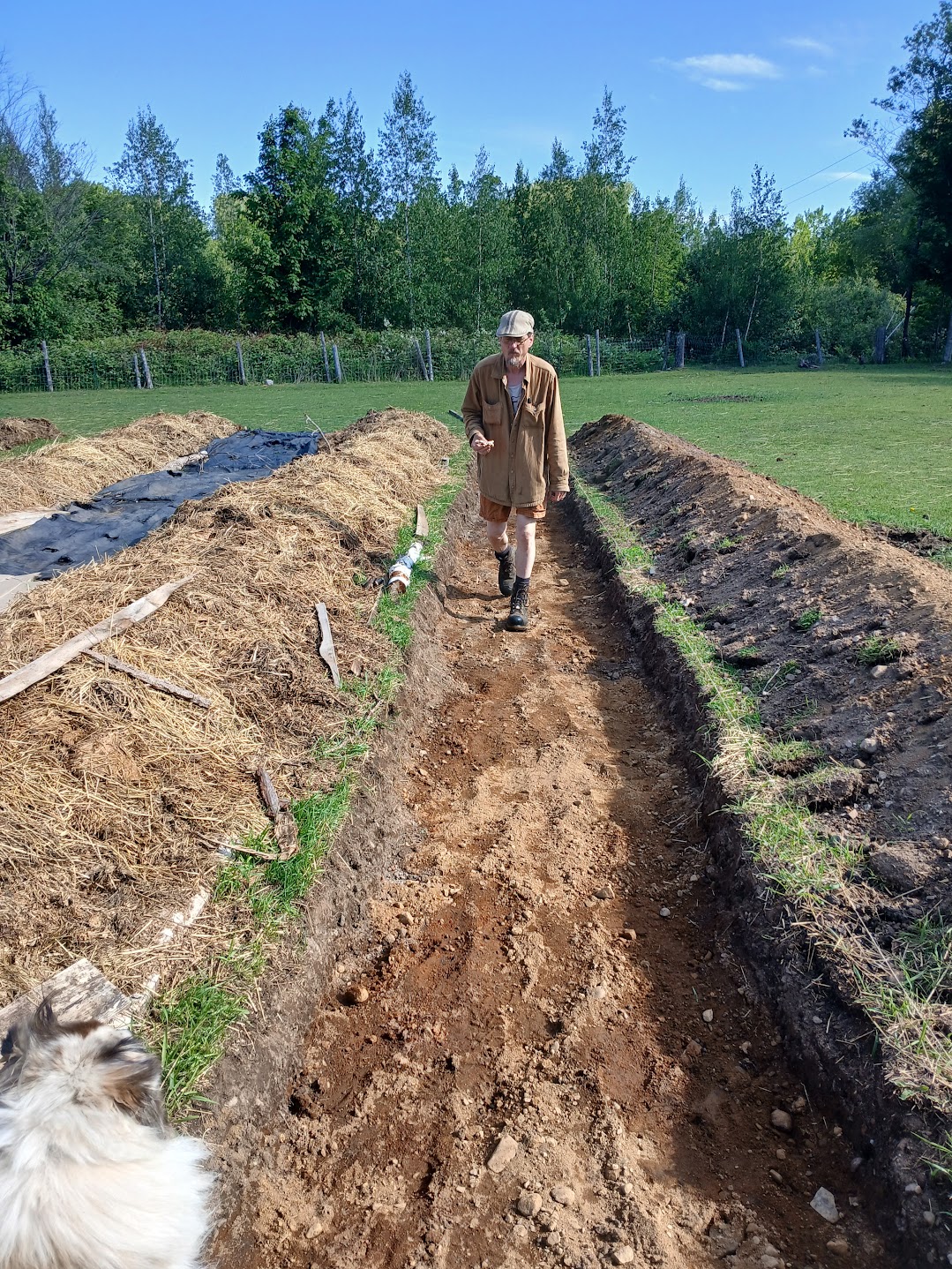
To support this entire ecosystem, Ivy and I engineered our agricultural infrastructure with a very specific capacity in mind.
Our garden, our custom canning center, and our planned root cellar are intentionally designed to sustain exactly ten people. That number isn’t an accident. It is the precise data footprint of our seven-person household, our two cabin tenants, and a buffer for seasonal farm hands. The objective is total self-reliance: maximizing our localized throughput so that except for a few basic staples, we can entirely eliminate grocery supply lines and easily survive an extended North Country winter snow-in.
When you look at a farm or a household through that lens, you realize you aren’t just managing property. You are stewarding a biological and social network.
Building for the Human API
In the software industry, we talk a lot about Diversity, Equity, and Inclusion. Too often, it gets flattened into a corporate compliance checklist or a set of human resources metrics.
To me, diversity is simply the optimization of the Human API.
When I build a remote engineering squad, I am intentionally looking for different cognitive styles, varied operational backgrounds, and unique perspectives. I want the engineer who looks at a problem with a hyper-focused, linear lens, and I want the engineer who sees the chaotic, macroscopic big picture. Those varied operating systems are not a friction point. They are your ultimate fail-safe against institutional groupthink and fragile architecture.
A stage manager leader understands that their primary job is to clear the baseline friction so the specialists can do deep work.
In a distributed engineering team, that means designing clear asynchronous communication channels, establishing predictable deployment rhythms, and protecting your developers from the constant, context-switching noise of unnecessary meetings. You have to ask yourself: Is the environment I am building supporting this person’s unique way of working, or am I forcing them to burn cognitive energy just to conform to my preferred process?
The Long Road to the Porch
This essay series marks the end of my intentional pause. Standing on the threshold over these past few months has allowed me to look back at my non-linear journey with total clarity.
The high-frequency rushes of the sub shops taught me throughput logistics. Appraising commercial properties taught me to audit structural integrity. Managing global engineering teams taught me how to optimize the Human API. And running this complex, joyful, multi-generational household alongside our conservation farm has taught me the truest definition of stewardship.
Every system I run, whether it is a software repository, an agricultural supply line, or a busy kitchen table full of family, is built for the long haul.
The porch lights are on, the infrastructure is stable, and the stage is set. I am entirely ready to step into my next leadership chapter, to anchor myself to a meaningful corporate mission, and to help an organization build human ecosystems that last.
Let’s connect, grab a coffee, and build something resilient together.